Naengmyeon 냉면
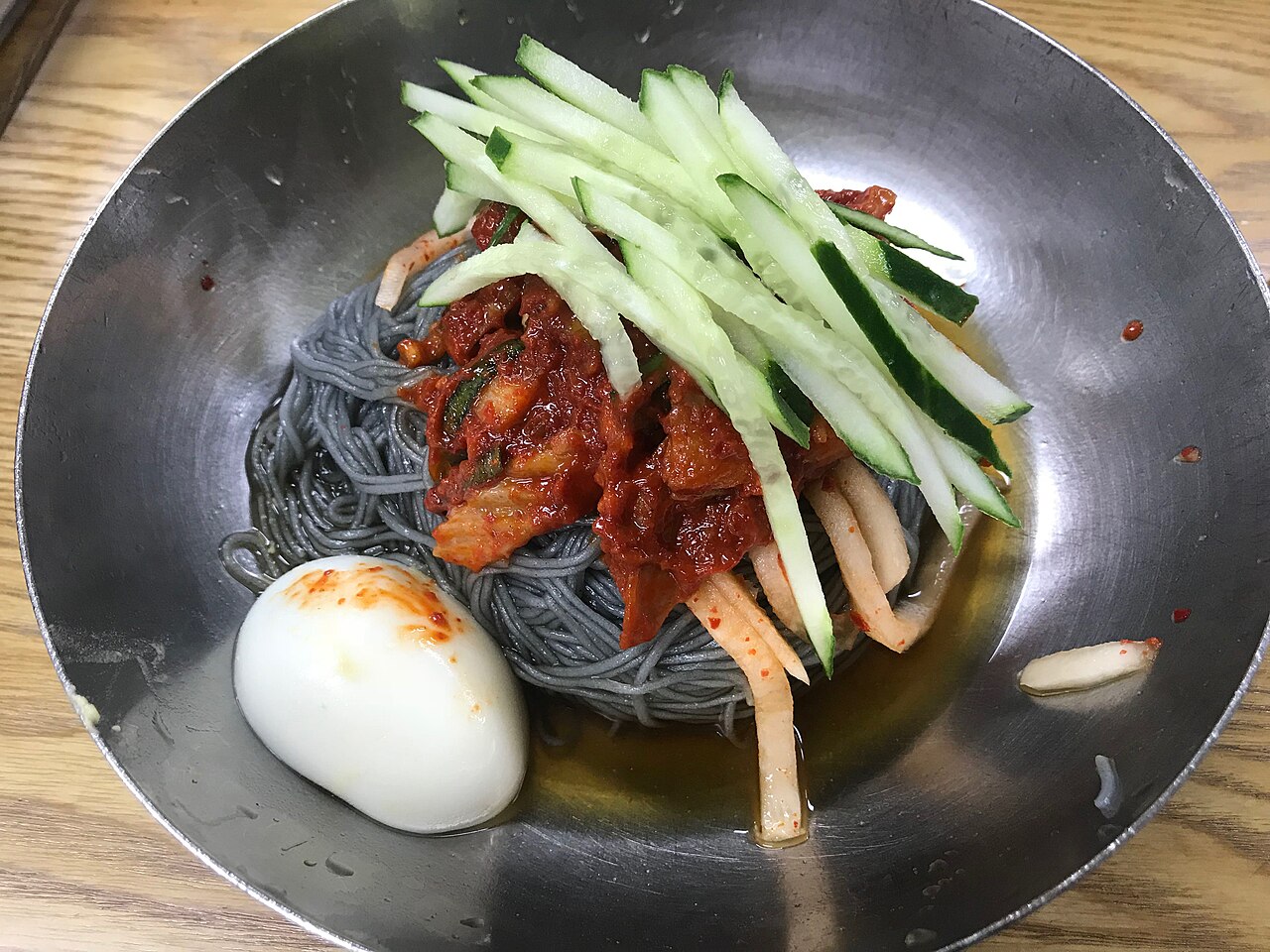
Naengmyeon (냉면) means "cold noodles". The noodles are thin and chewy, made from buckwheat, starch or wheat, and served cold in a chilled broth or tossed in a spicy sauce. It is eaten year round in Korea, though it is especially popular in summer.
Naengmyeon comes from the north of the Korean peninsula, and the Pyeongyang and Hamheung styles are named after northern cities. Many restaurants in Seoul specialize in it, and it is also a common ending for a barbecue meal.
"Naengmyeon" is really a family of dishes. The noodles, the broth and the sauce change from one kind to the next, so it helps to know them before you order.
Kinds of naengmyeon
Pyeongyang naengmyeon 평양냉면
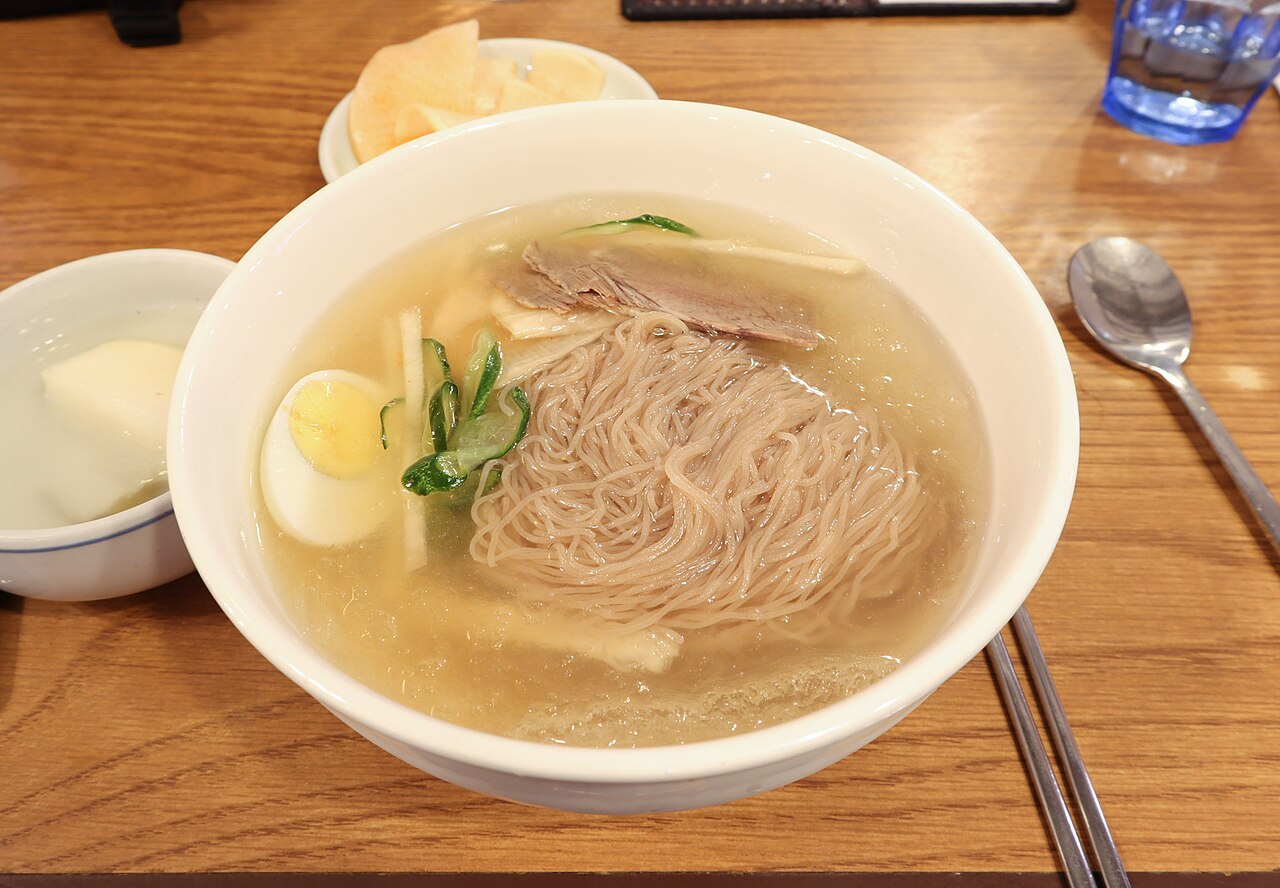
This is the northern original, named after Pyeongyang. Its pale noodles contain a lot of buckwheat, so they are soft, easy to cut and slightly earthy. They come in a clear, cold beef or beef and dongchimi (동치미, radish water kimchi) broth that is mild and not very salty. First-timers sometimes find it bland. Diners usually add a little vinegar or mustard at the table.
Hamheung naengmyeon 함흥냉면
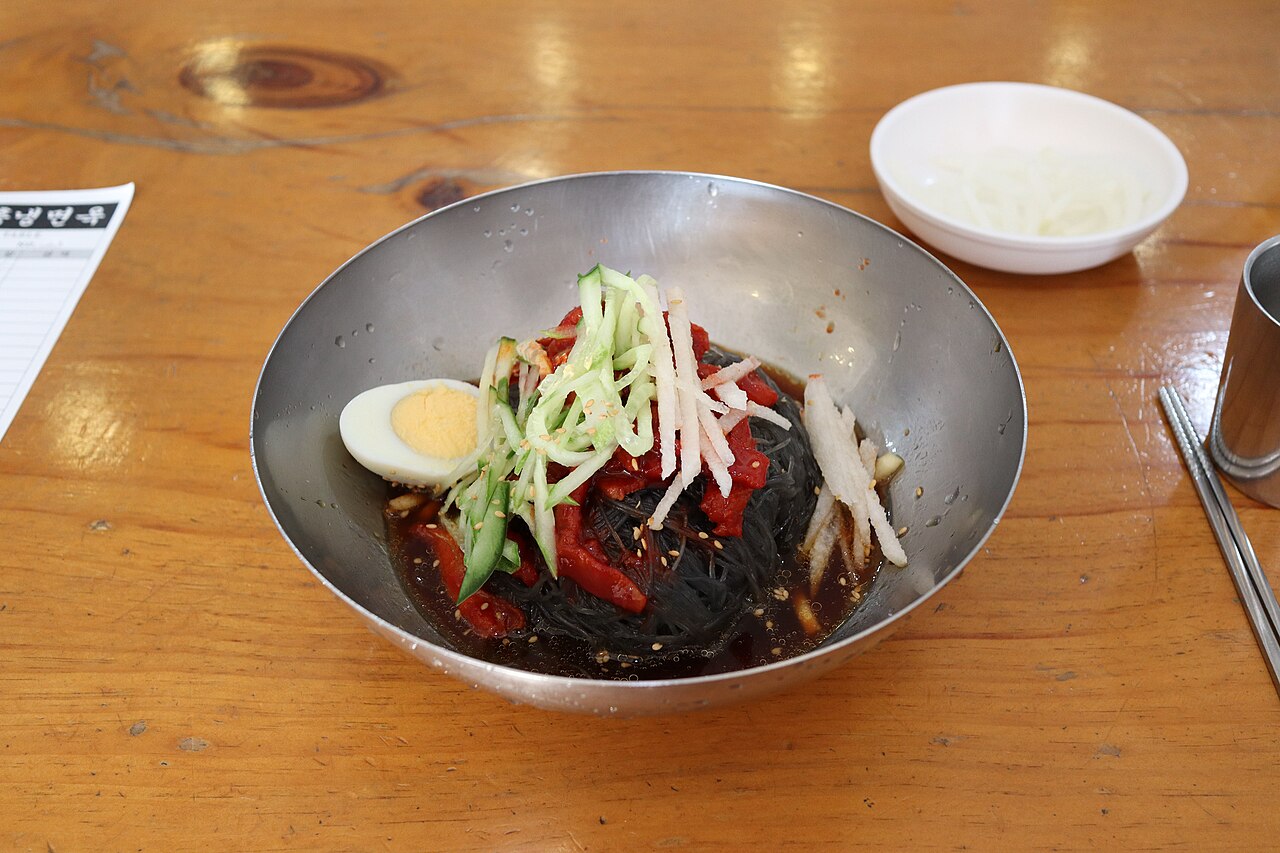
Named after Hamheung in the north, this kind uses chewy, thin noodles made from potato or sweet potato starch. It is usually served mixed with a spicy, sweet red sauce, and is often topped with raw fish or skate (hoe, 회) in a version called hoe-naengmyeon (회냉면). It is more strongly flavored than Pyeongyang naengmyeon and has a firmer, springier bite. Many diners ask for a cup of broth on the side, and scissors cut the long noodles.
Mul and bibim naengmyeon 물냉면·비빔냉면
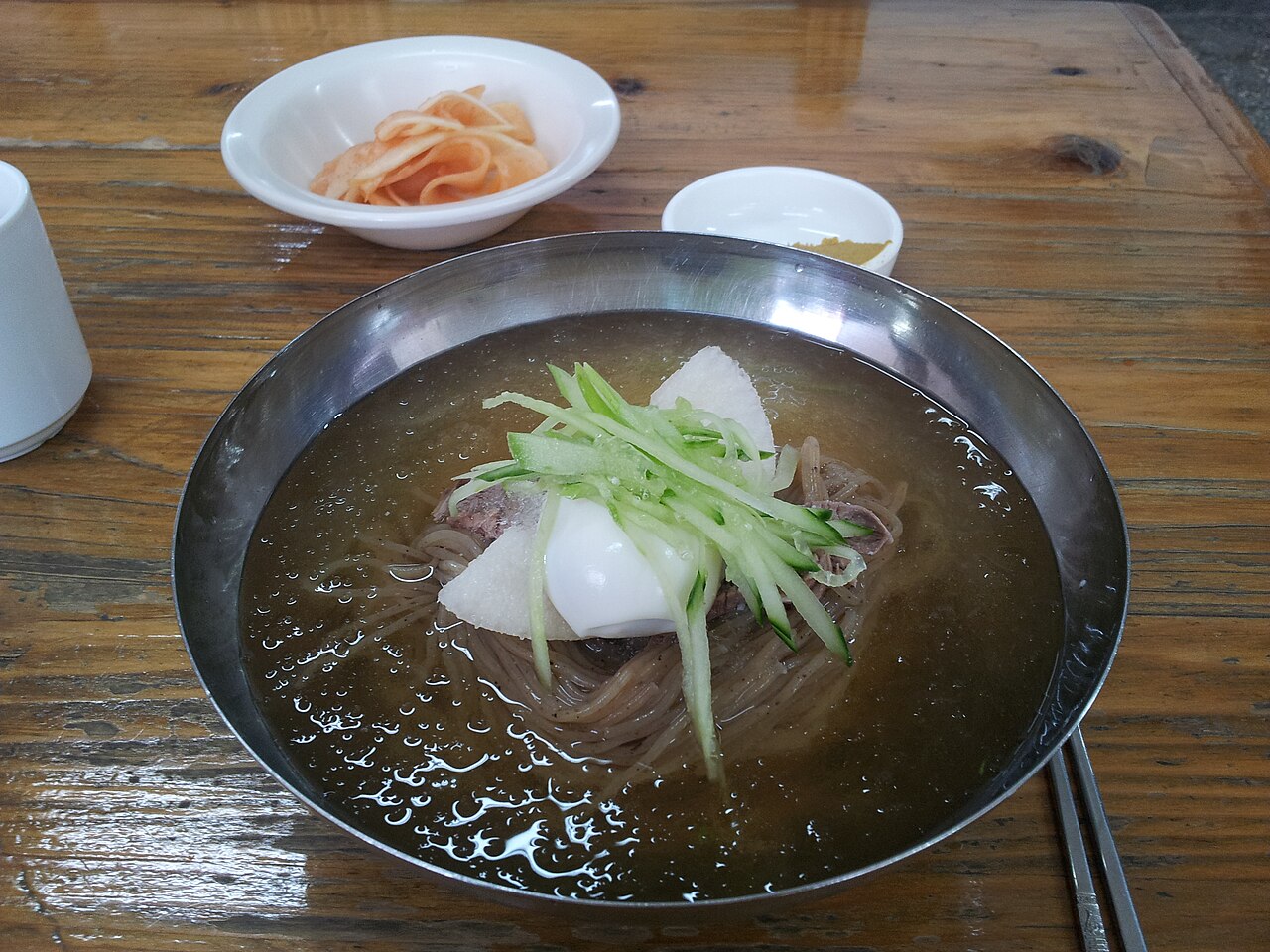
These are the two ordering choices on most menus. Mul (물) means water: mul-naengmyeon is noodles in an icy broth with radish, cucumber and egg, and it is refreshing and not spicy. Bibim (비빔) means mixed: bibim-naengmyeon has a small amount of broth, or none, and is stirred with a spicy gochujang (고추장) sauce. If you are not sure, order mul first for a milder taste, or ask for bibim "deol maepge" (덜 맵게) for less heat.
Milmyeon 밀면
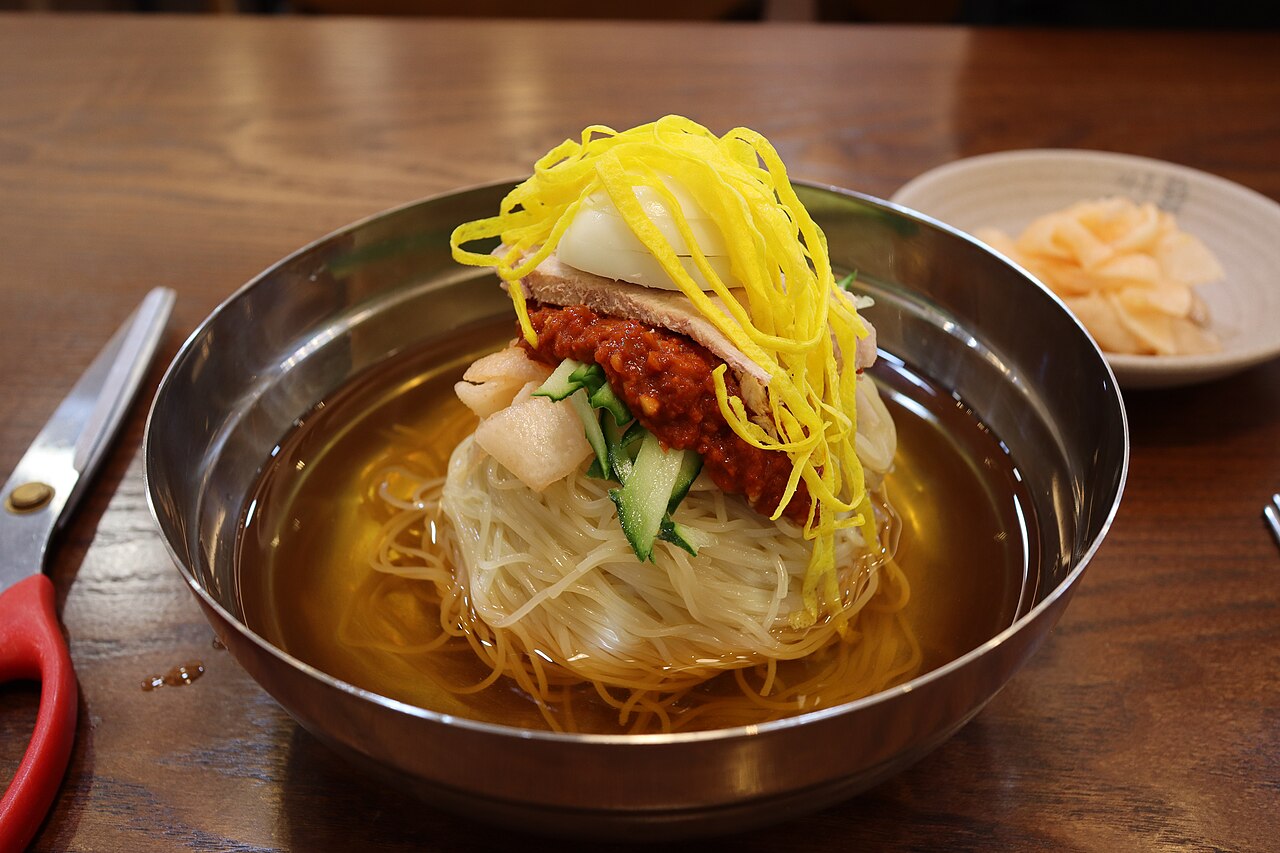
Mil (밀) means wheat. Milmyeon is a Busan specialty, so a regional cousin of naengmyeon, with wheat noodles that are softer and thicker than buckwheat ones. It is served in a sweet, slightly tangy cold broth with a spoonful of spicy seasoning, and it is also made as a mixed version. You will find it at Busan-style restaurants in Seoul as well as in Busan itself.
Makguksu 막국수
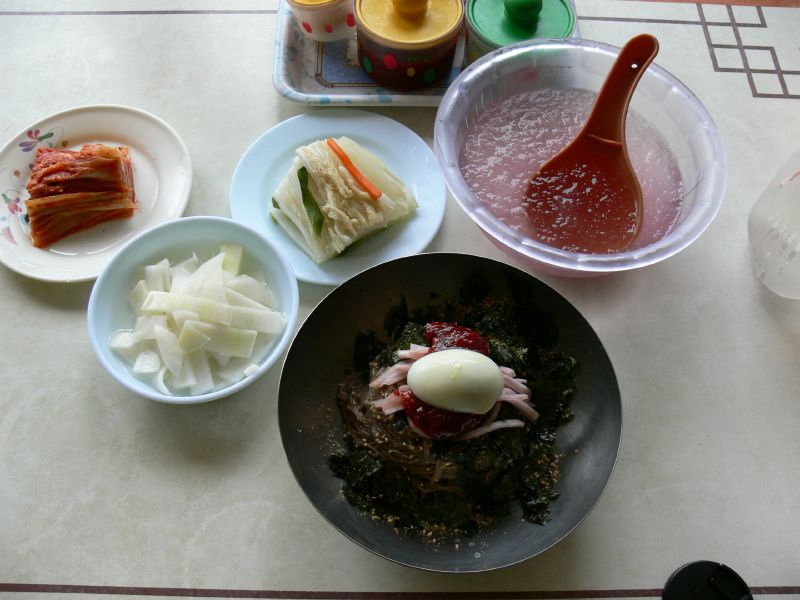
Makguksu is a buckwheat noodle dish from Gangwon Province. Mak (막) suggests a casual, rough-and-ready style. Buckwheat noodles are served cold, either in a light broth (mul-makguksu, 물막국수) or mixed with a seasoned sauce (bibim-makguksu, 비빔막국수), and often come with a little sesame oil or perilla seeds. The flavor is nuttier and more rustic than naengmyeon,.
How to eat and order
Order by the bowl and say the kind: "mul naengmyeon" or "bibim naengmyeon". For Pyeongyang naengmyeon, look for the word pyeongyang (평양) in the name of the restaurant or the dish.
Pour the vinegar and mustard sparingly, taste, then adjust. Many places serve a cup of warm broth (yuksu, 육수) while you wait. Staff may offer to cut the noodles with scissors; say yes if the noodles are long.
Naengmyeon is often paired with grilled meat, dumplings (mandu, 만두) or sliced boiled pork (suyuk, 수육).
Average price in Seoul
₩12,692 Cold noodles, Aug 2026
Seoul average, Korea Consumer Agency, Aug 2026, for a standard serving.
Where to find it
- Changdeokgung Palace & Jongmyo Shrine 창덕궁·종묘 Pyongyang naengmyeon
- Olympic Park 올림픽공원 Pyongyang naengmyeon
Photo credits
- Main photo: lazy fri13th, CC BY 2.0, Wikimedia Commons
- Pyeongyang naengmyeon: Mobius6, CC BY-SA 4.0, Wikimedia Commons
- Hamheung naengmyeon: Mobius6, CC BY-SA 4.0, Wikimedia Commons
- Mul and bibim naengmyeon: 커뷰, CC BY-SA 3.0, Wikimedia Commons
- Milmyeon: Mobius6, CC BY-SA 4.0, Wikimedia Commons
- Makguksu: pcamp, CC BY 2.0, Wikimedia Commons