Tteokbokki 떡볶이
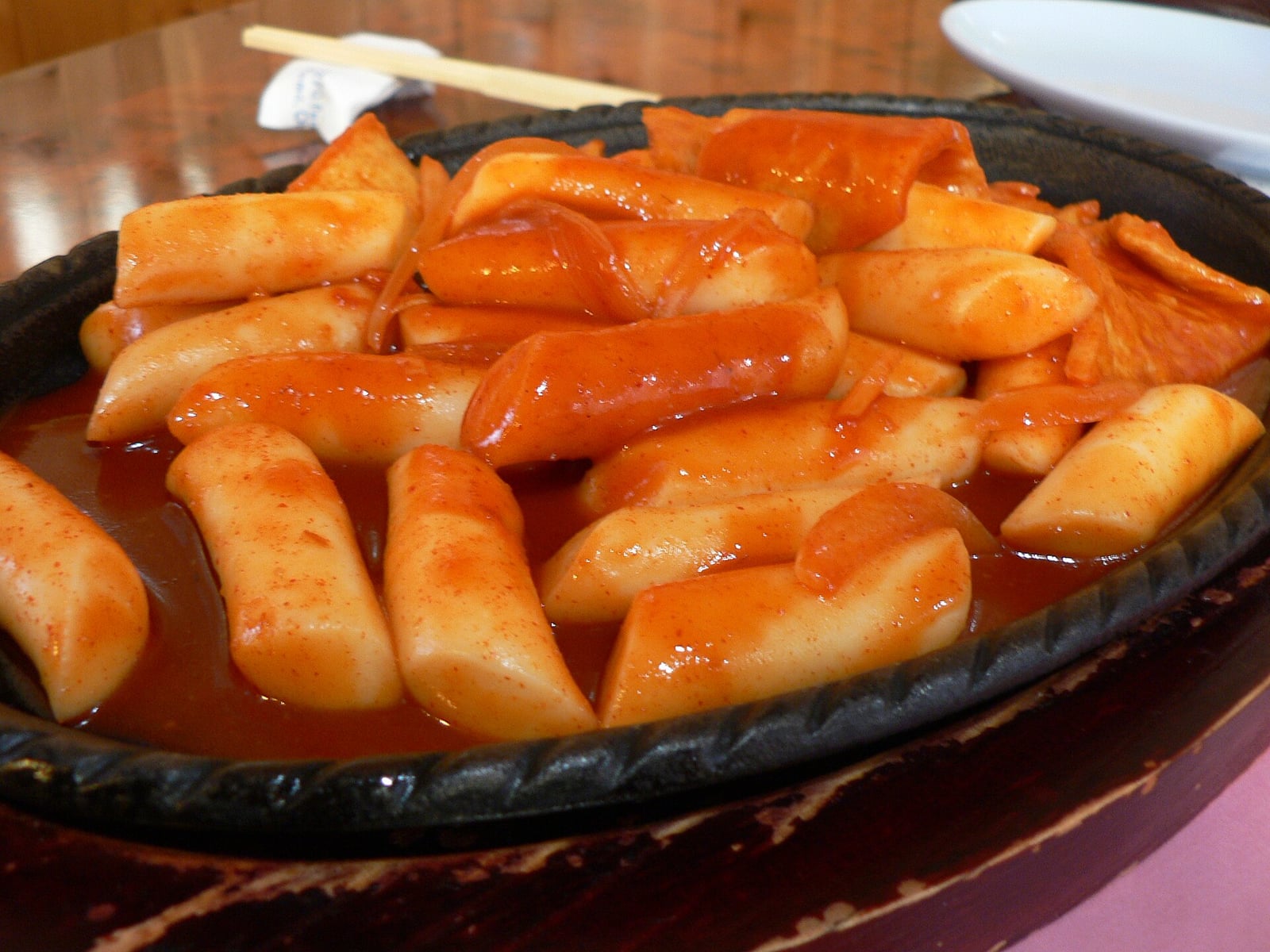
Tteokbokki (떡볶이) is chewy, cylinder-shaped rice cakes, called tteok (떡), cooked in a sauce. The classic version is sweet, spicy and a little sticky, made with gochujang (고추장), Korean chili paste, and usually served with fish cake (eomuk, 어묵), sometimes with a boiled egg or scallions.
It is Korea's everyday snack. You find it at street stalls, at small snack restaurants called bunsik (분식) shops, and in a pot at the table at dedicated tteokbokki restaurants. Locals eat it after school, as a light lunch, or as a late snack.
"Tteokbokki" covers several quite different dishes. What changes is how much liquid there is and what the sauce is made from, so it helps to know the kinds before you order.
Kinds of tteokbokki
Soupy tteokbokki 국물떡볶이
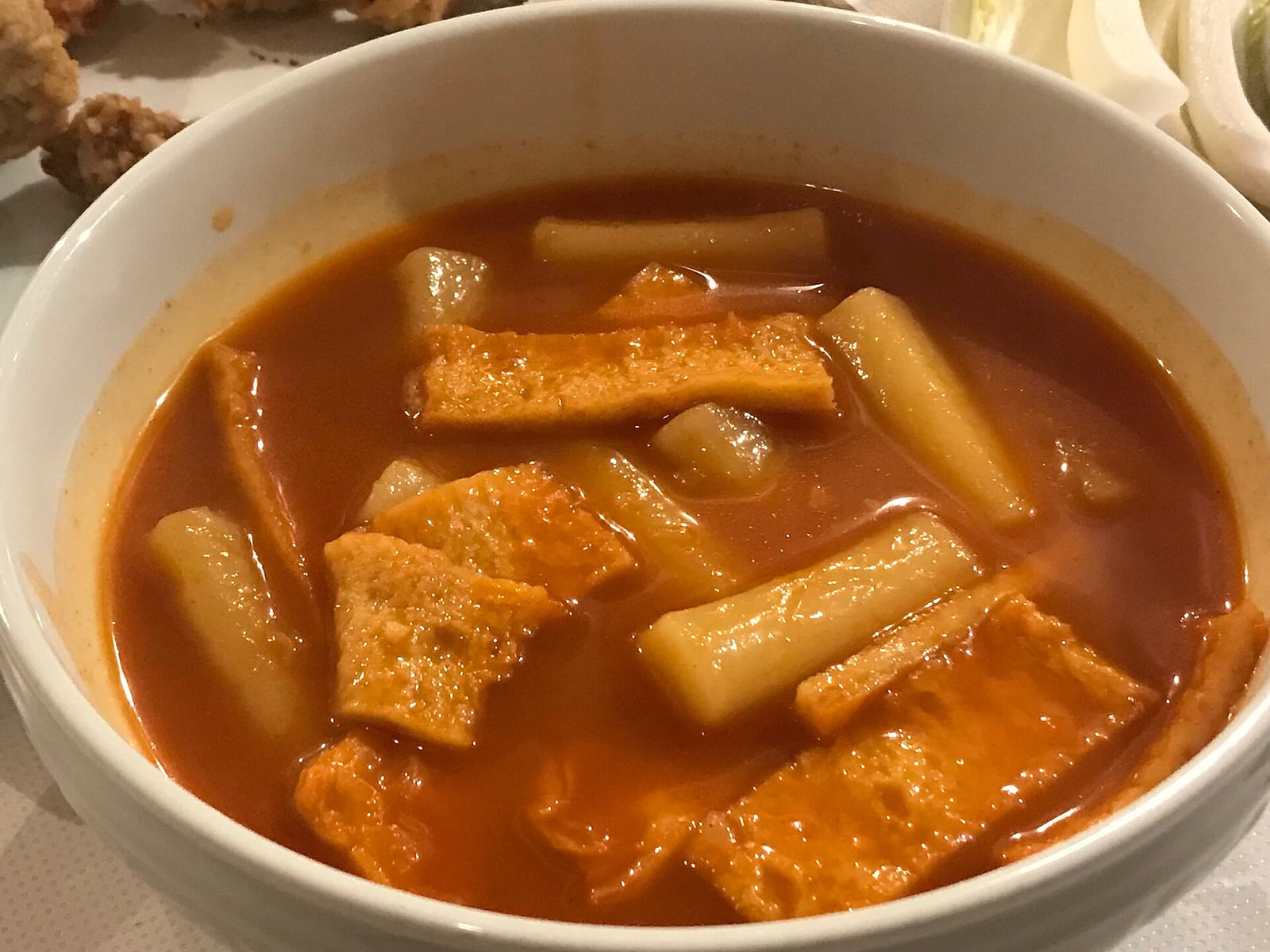
This is the one most visitors picture: rice cakes and fish cake in a generous amount of red, slightly thin sauce, served in a bowl. Gungmul (국물) means broth or soup, and you can drink the sauce with a spoon. It is the usual choice at street stalls and bunsik shops. Fried snacks (twigim, 튀김) are often dunked in the sauce, and it is a good order on a cold day.
Cook-it-yourself tteokbokki 즉석떡볶이
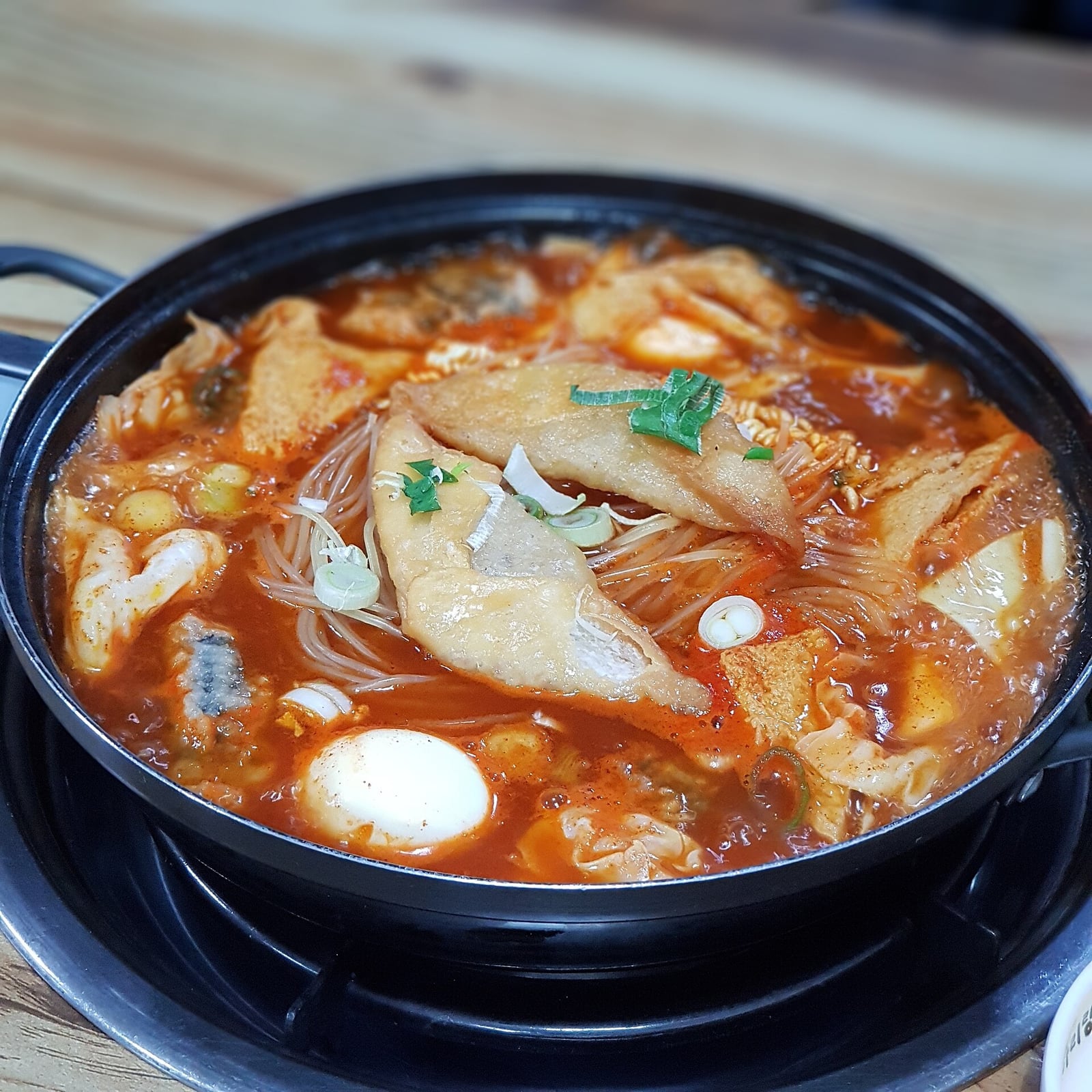
Jeukseok (즉석) means "made on the spot". The staff bring a wide pan or pot of raw ingredients and sauce to a burner on your table, and it finishes cooking in front of you. Common add-ins are ramyeon noodles, glass noodles (dangmyeon, 당면), dumplings, vegetables, egg and cheese, usually ordered as extra portions called sari (사리). It is a sit-down meal for a group rather than a quick snack, and many places turn the leftover sauce into fried rice at the end.
Royal court tteokbokki 궁중떡볶이
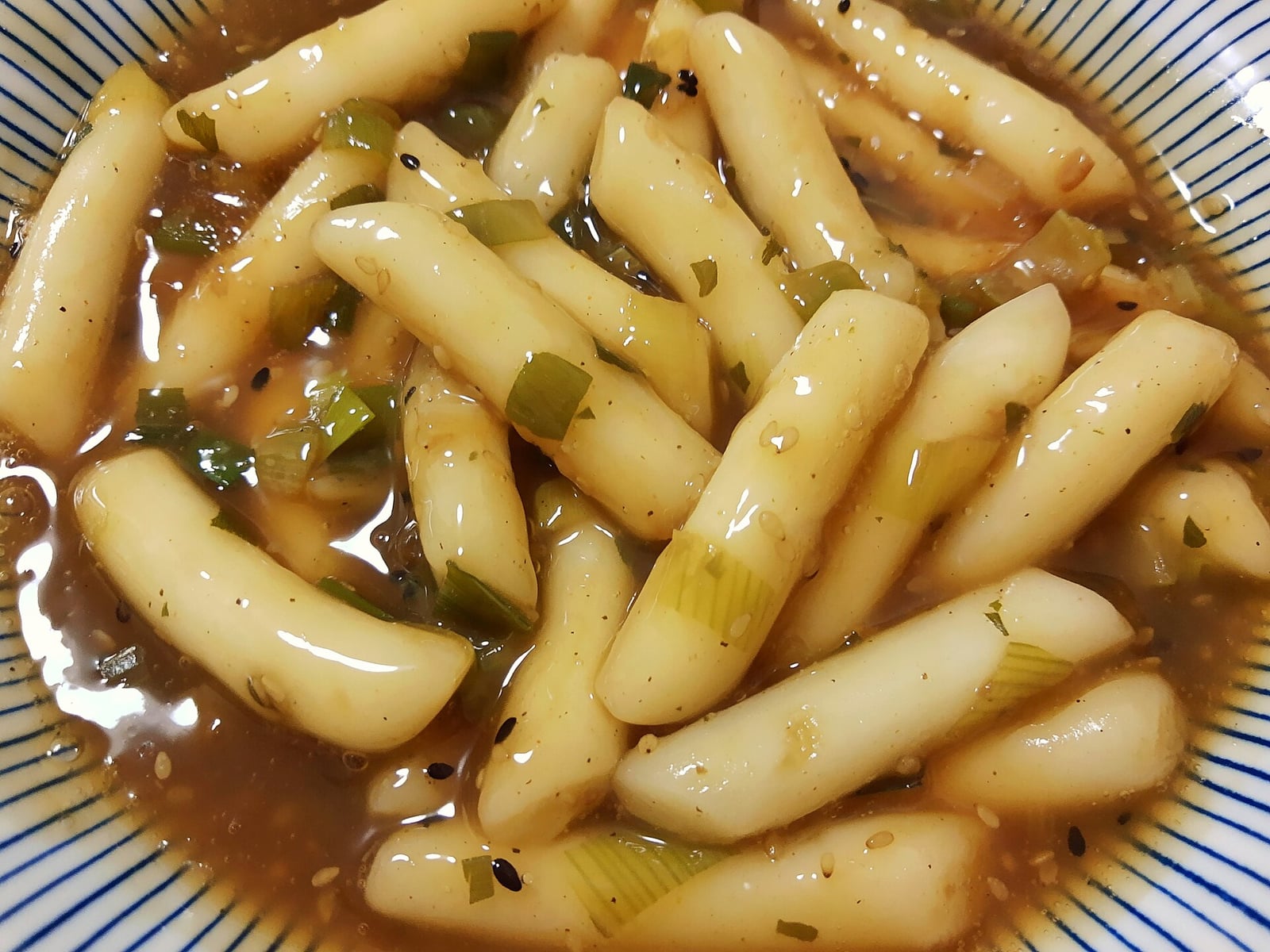
Gungjung (궁중) means royal court. This kind is seasoned with soy sauce (ganjang, 간장) instead of chili paste, so it is savory, lightly sweet and not spicy. It is often described as the older form of the dish, from before chili paste was common, and it is usually cooked with meat and vegetables. It is the safest pick for anyone who does not eat spicy food. Restaurants differ a lot in what they add, and the photo shows a simple soy sauce version.
Oil tteokbokki 기름떡볶이
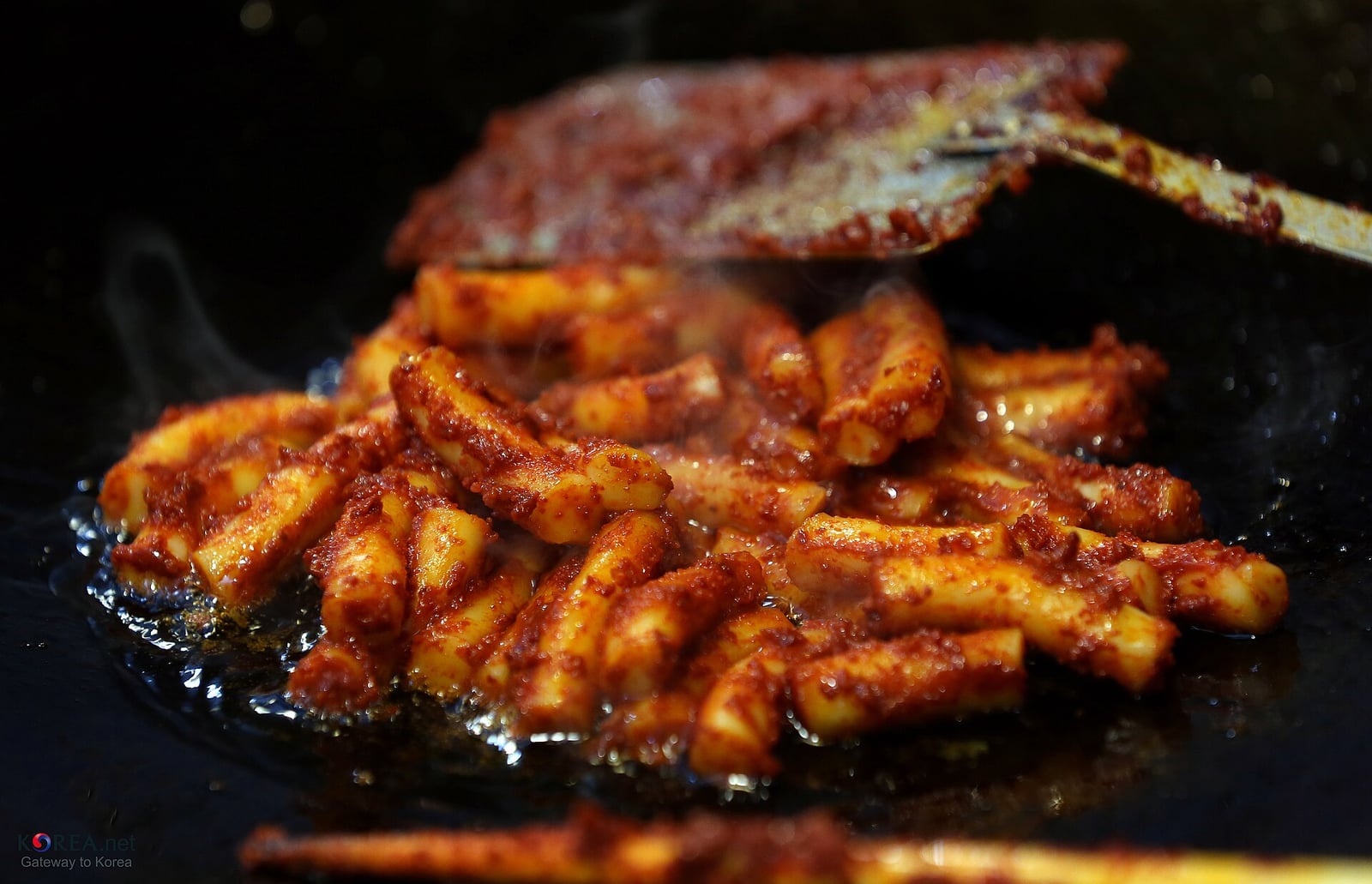
Gireum (기름) means oil. The rice cakes are pan-fried in oil and coated with a chili seasoning instead of sitting in a sauce, so the result is drier, a little crisp outside and chewy inside. It is closely tied to traditional markets. Tongin Market in Seochon, the source of the photo, is known for it. It is usually sold by the plate at a market stall, and you eat it with a small fork or toothpick.
Rosé tteokbokki 로제떡볶이
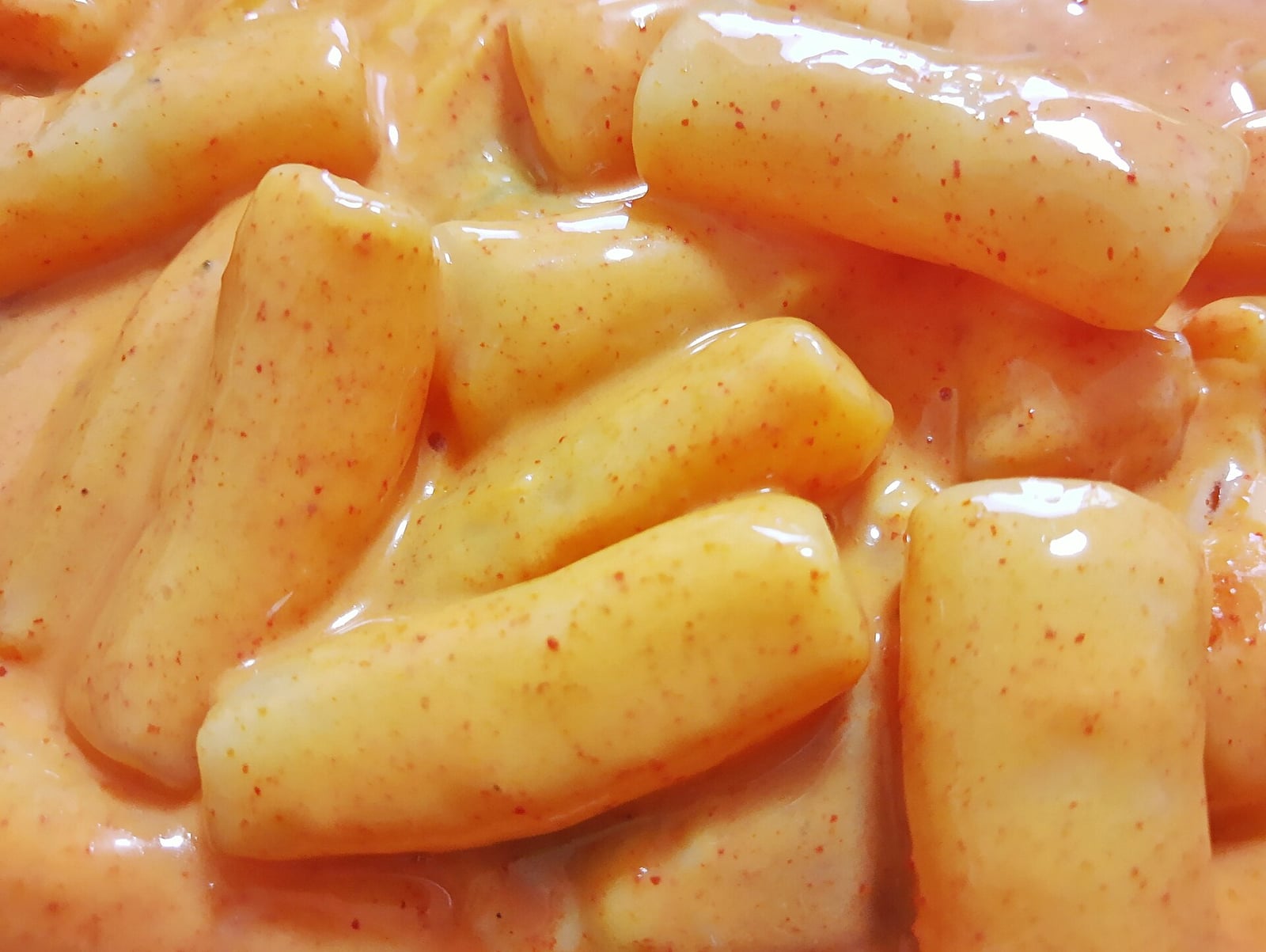
Rosé tteokbokki is a newer style that mixes the chili sauce with cream or milk. That gives a pink-orange color, a creamy texture and a milder heat. It is popular at modern snack restaurants and is often served with cheese, sausage or noodles on top. If you find regular tteokbokki too sharp, this is the kind to try first.
How to eat and order
At a street stall or bunsik shop, point at what you want or order by the portion. Say "tteokbokki" and add "deol maepge" (덜 맵게) for less spicy. Eat standing or at the counter with the skewer or fork they hand you, and dip the fried snacks into the sauce.
Common side orders are twigim (튀김, fried fritters), sundae (순대, Korean blood sausage) and gimbap (김밥).
At a cook-it-yourself restaurant, order the base pot first, then add noodles or other extras as it cooks. Pots are sized for two or more people, so ask staff how many it feeds. Wait for the sauce to bubble before you start, and ask for fried rice (bokkeum-bap, 볶음밥) when the pot is almost empty.
Where to find it
- Seochon 서촌 Gireum tteokbokki
Photo credits
- Main photo: Sung Sook, CC BY 2.0, Wikimedia Commons
- Soupy tteokbokki: lazy fri13th, CC BY 2.0, Wikimedia Commons
- Cook-it-yourself tteokbokki: 박진영, CC0, Wikimedia Commons
- Royal court tteokbokki: Scudsvlad, CC BY-SA 4.0, Wikimedia Commons
- Oil tteokbokki: Republic of Korea (Korea.net), CC BY-SA 2.0, Wikimedia Commons
- Rosé tteokbokki: Scudsvlad, CC BY-SA 4.0, Wikimedia Commons