Kalguksu and mandu 칼국수·만두
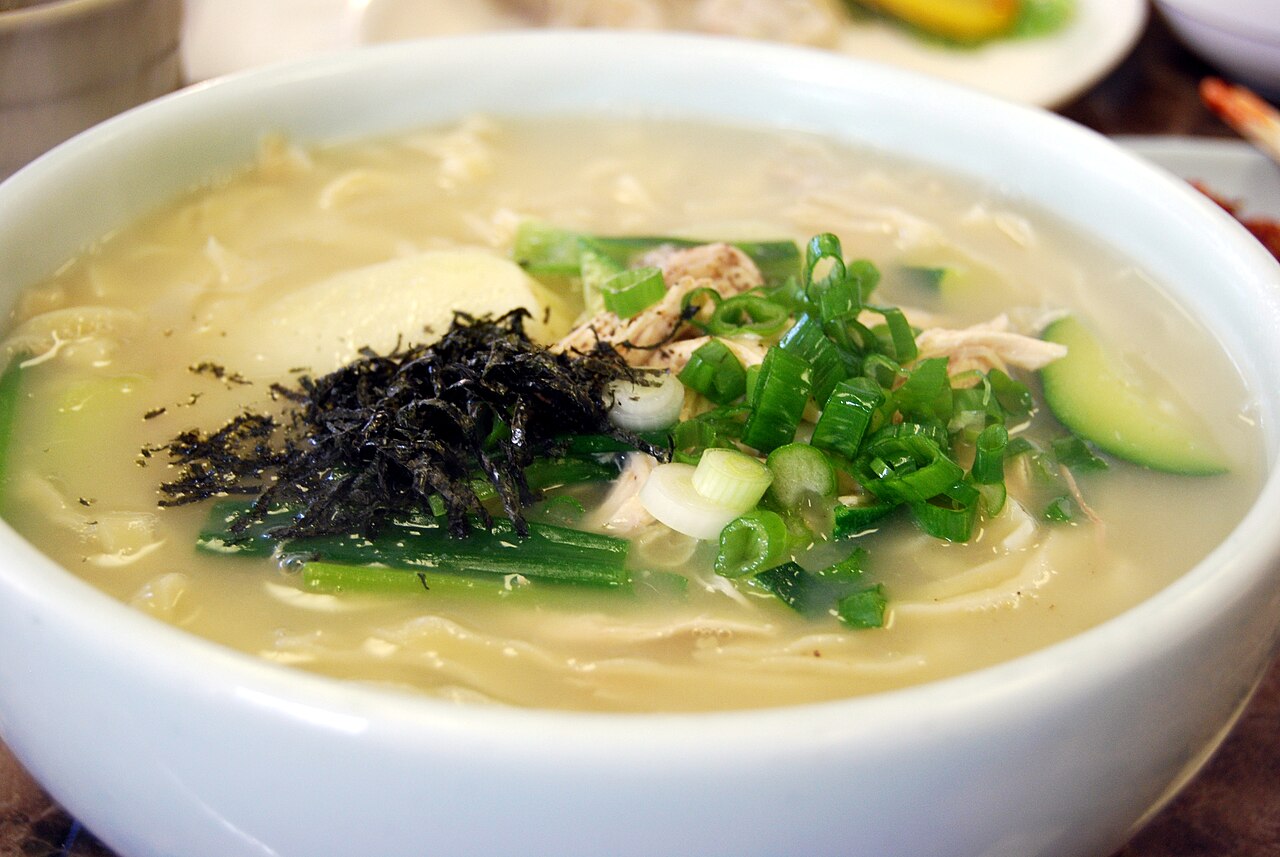
Kalguksu (칼국수) is a bowl of wheat noodles in a hot broth. Kal (칼) means knife and guksu (국수) means noodles, because the dough is rolled flat and cut by knife instead of being pulled or pressed. The noodles are soft and a little starchy, and the flour on them thickens the broth as you eat.
Mandu (만두) are Korean dumplings, and many kalguksu restaurants serve both, often on the same menu. You can have mandu on their own, steamed or fried, or in a soup, and a lot of places sell kalguksu and mandu together as a set.
The broth is what makes one bowl different from the next, so it helps to know a few kinds before you order.
Kinds of kalguksu and mandu
Bajirak-kalguksu 바지락칼국수
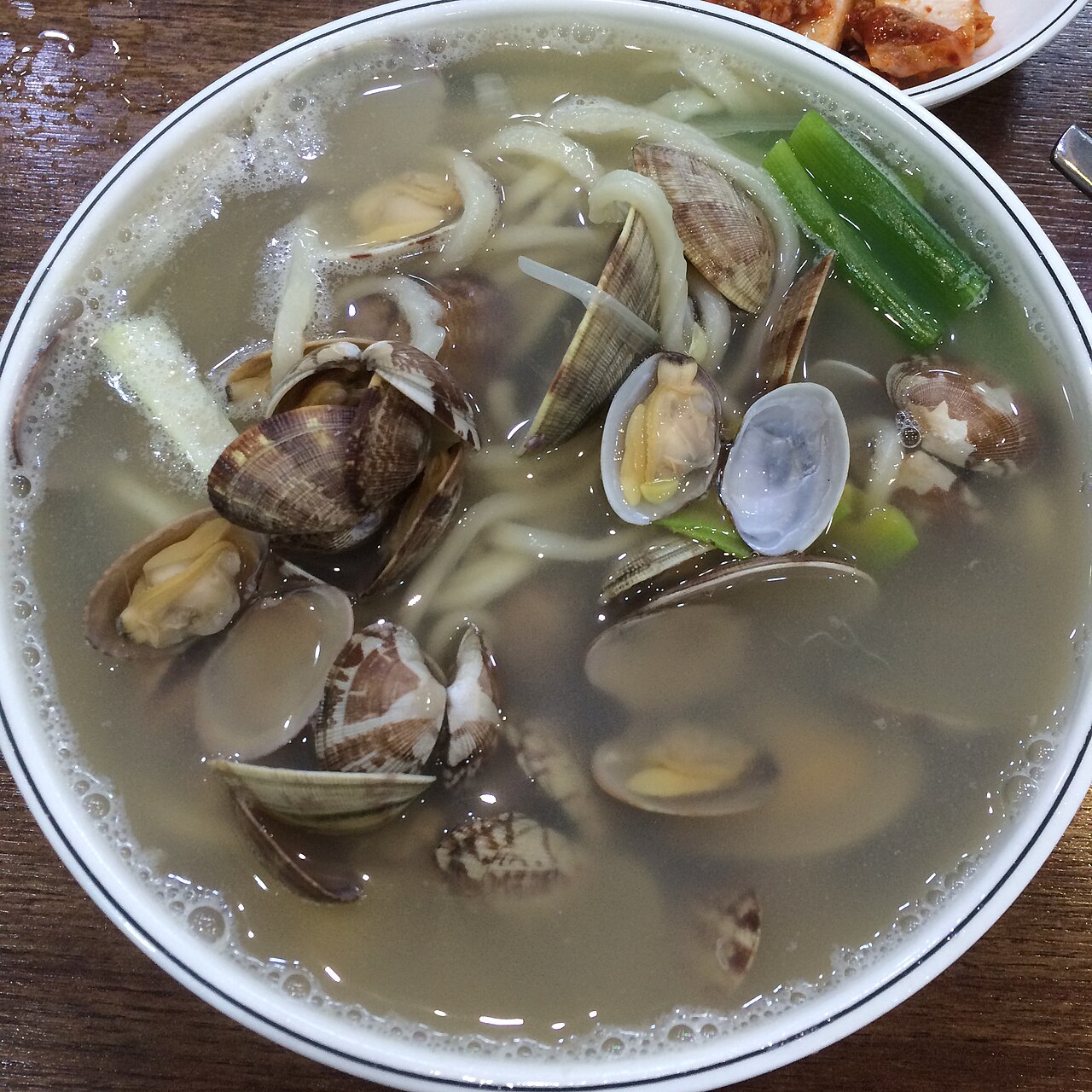
Bajirak (바지락) are small clams, and this is the kalguksu you will see most often near the coast. The clams are boiled in the broth, which turns clear, light and a little salty-sweet. Leave the shells on the side plate, and check the clams for grit before you eat them.
Dak-kalguksu 닭칼국수
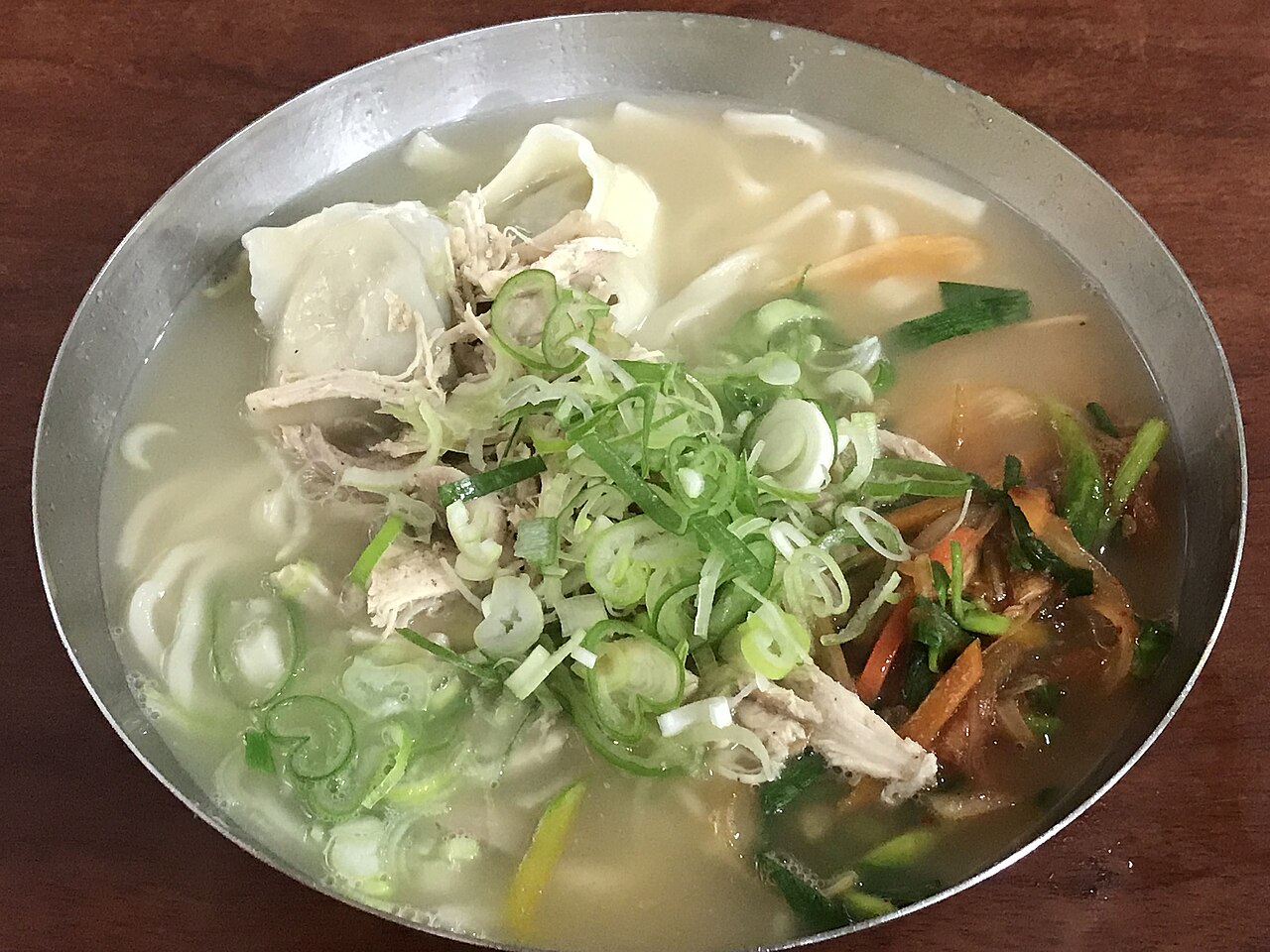
Dak (닭) means chicken. The broth is made from chicken and is milder and richer than the clam kind, with shredded chicken on top, and some places add a dumpling or two. It is a safe first choice if you do not eat shellfish, and a good one on a cold day.
Deulkkae-kalguksu 들깨칼국수
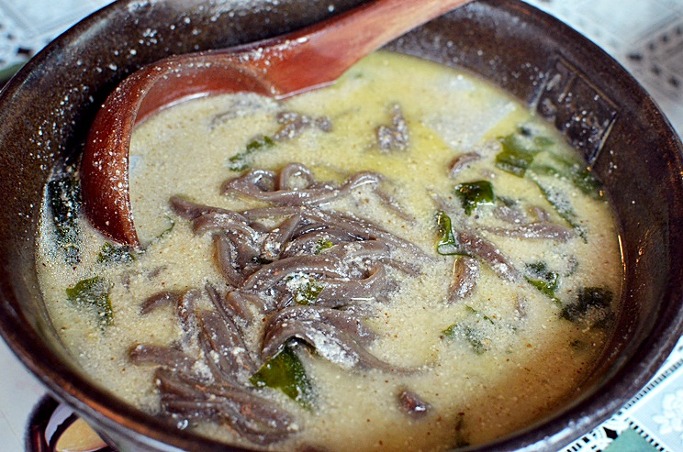
Deulkkae (들깨) are perilla seeds. They are ground into the broth, which makes it thick, creamy and nutty without being spicy. Many people like it for the smooth taste, and if you avoid meat or seafood, ask what the broth is made from before you order.
Son-kalguksu and kaljebi 손칼국수·칼제비
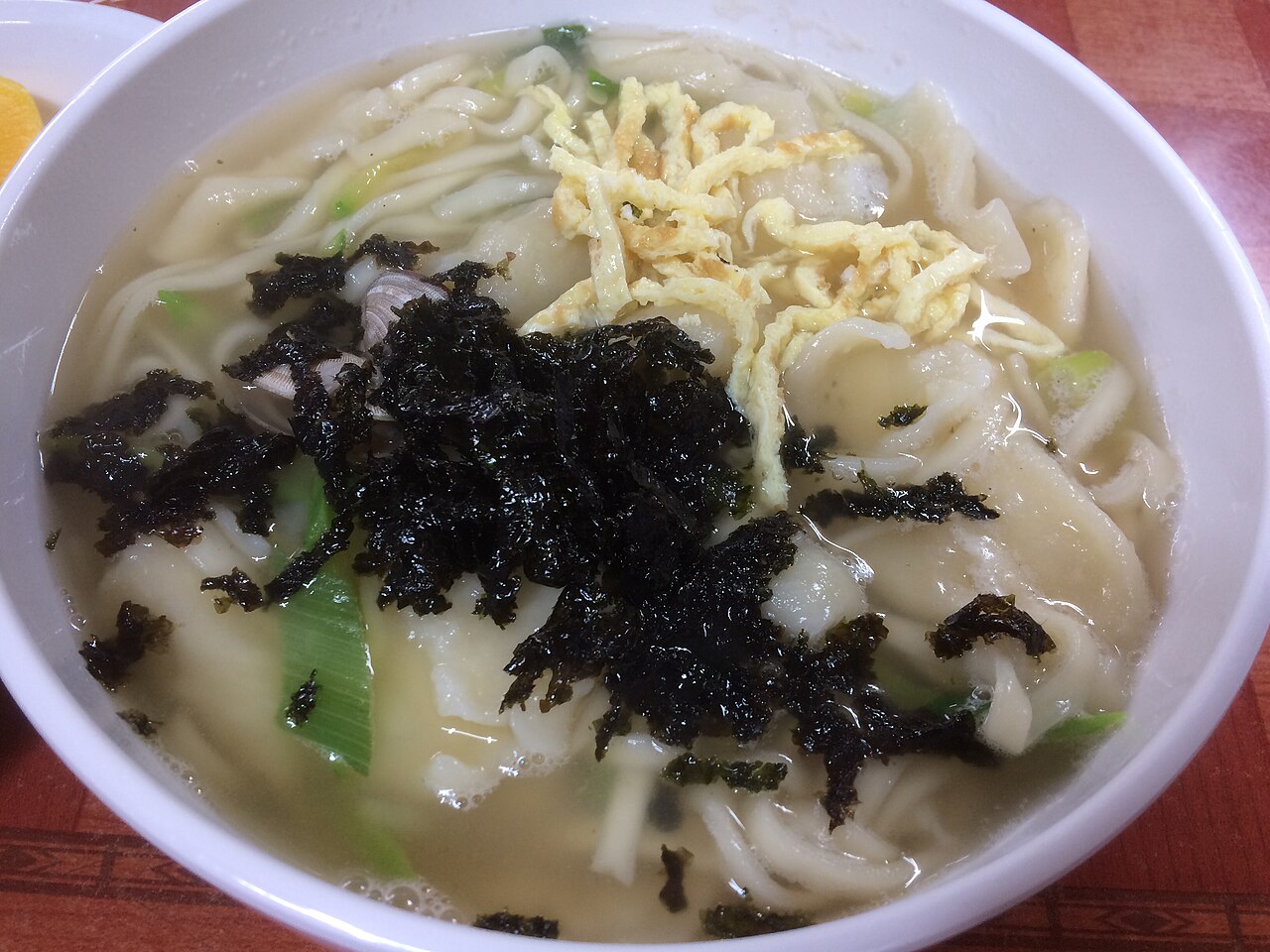
Son-kalguksu (손칼국수) means hand-cut kalguksu, a name restaurants use for noodles rolled and cut in the kitchen. Kaljebi (칼제비) is kalguksu mixed with sujebi (수제비), torn pieces of dough, so you get two kinds of wheat dough in one bowl. Both usually come with a plain, clear broth, and the thickness of the noodles is the main difference from place to place.
Gogi-mandu and kimchi-mandu 고기만두·김치만두
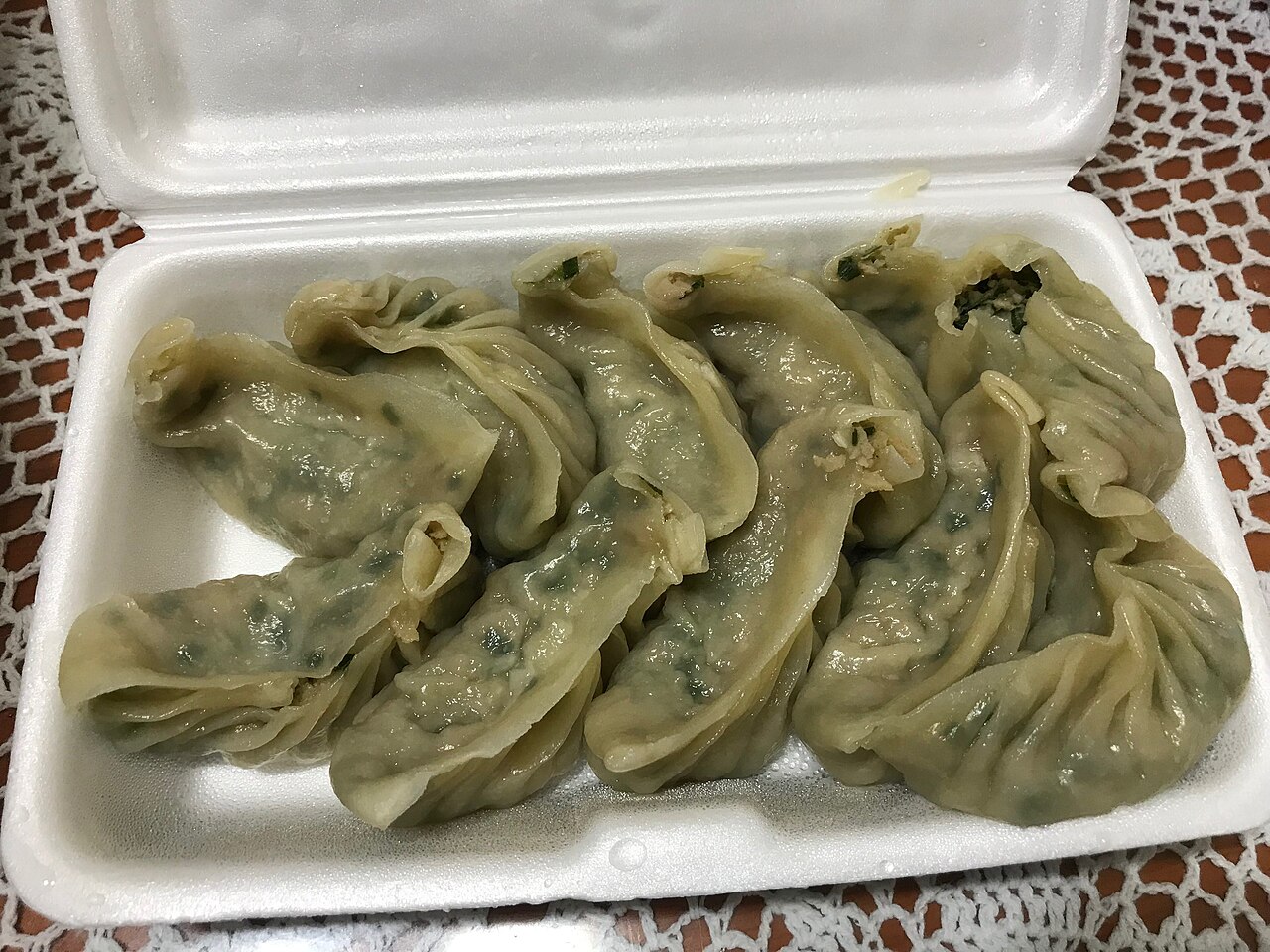
Gogi-mandu (고기만두) are often filled with minced pork, and kimchi-mandu (김치만두) are filled with chopped kimchi, so they have a sour and spicy taste. Both are usually steamed, and some places fry them as well. If you cannot eat much spice, order gogi-mandu, and ask whether the filling has pork if you avoid it.
Wang-mandu and Hwanghae-style mandu 왕만두·황해도식 만두
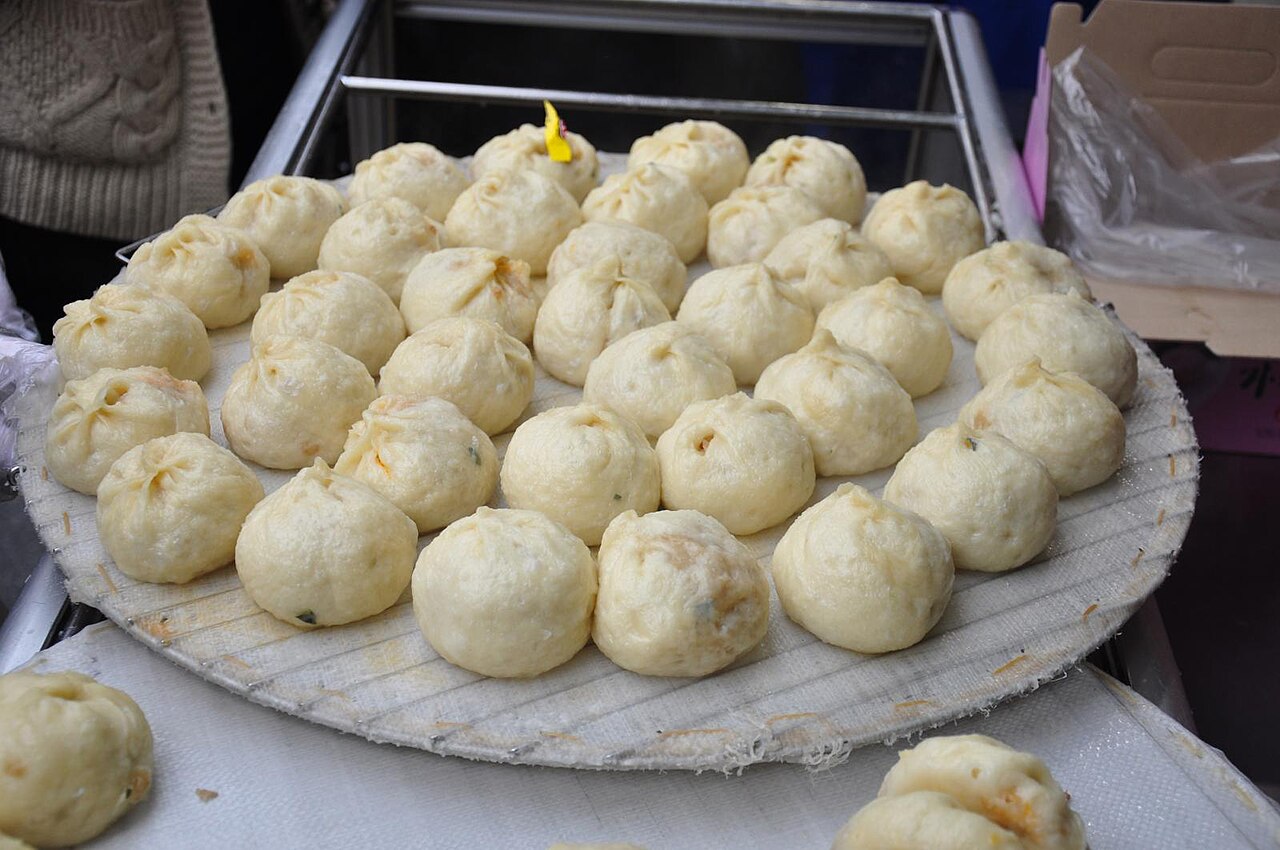
Wang-mandu (왕만두) means king dumpling, a mandu made much bigger than usual. Hwanghae-style mandu (황해도식 만두) come from the Hwanghae region, now in North Korea, and are known for being large and mild in taste. One or two are enough for a light meal, and they are easier to eat if you cut them in half with chopsticks.
Manduguk 만둣국
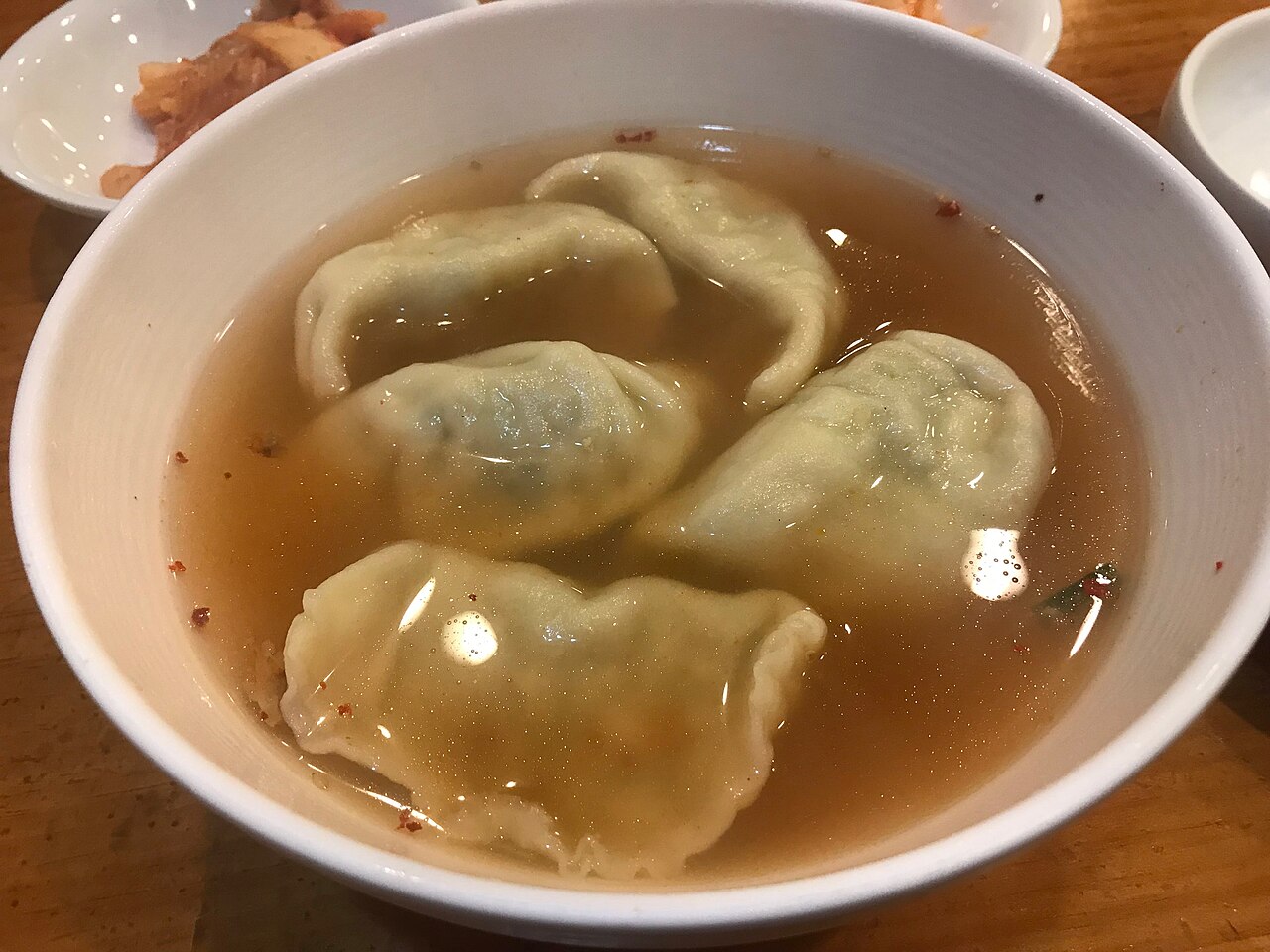
Manduguk (만둣국) is mandu served in a clear broth, usually made from beef or anchovy, and sometimes with sliced rice cakes. It is less filling than kalguksu and good when you want something light. Many people eat it on Lunar New Year, so you will see it on menus all year but more often in winter.
How to eat and order
Order by the name and pay at the counter or table. Most places serve one bowl per person, and you can ask for kalguksu with mandu in the same order. Some restaurants set a two-person minimum for bigger dishes, so check the menu.
Taste the broth before adding anything. The usual table extras are a bowl of kimchi, and many places also have chili paste or soy sauce with chopped chili for the mandu. Add them a little at a time.
Use the spoon for broth and chopsticks for noodles. The noodles keep cooking in the hot broth, so eat soon after it arrives, and do not worry about slurping. Rice is not usually served with it, but many places will bring a small bowl for the end if you ask.
Average price in Seoul
₩10,038 Kalguksu, Aug 2026
Seoul average, Korea Consumer Agency, Aug 2026, for a standard serving.
Where to find it
- Insa-dong 인사동 Hwanghae-style mandu
- Myeong-dong 명동 Kalguksu and mandu
- Namdaemun Market 남대문시장 Kalguksu
Photo credits
- Main photo: jslander, CC BY 2.0, Wikimedia Commons
- Bajirak-kalguksu: chomjong, CC BY 2.0, Wikimedia Commons
- Dak-kalguksu: lazy fri13th, CC BY 2.0, Wikimedia Commons
- Deulkkae-kalguksu: 향긋한 커피매니아, CC BY 4.0, Wikimedia Commons
- Son-kalguksu and kaljebi: Kinkreet, CC BY-SA 4.0, Wikimedia Commons
- Gogi-mandu and kimchi-mandu: lazy fri13th, CC BY 2.0, Wikimedia Commons
- Wang-mandu and Hwanghae-style mandu: Graham Hills, CC BY 2.0, Wikimedia Commons
- Manduguk: lazy fri13th, CC BY 2.0, Wikimedia Commons