Gukbap 국밥
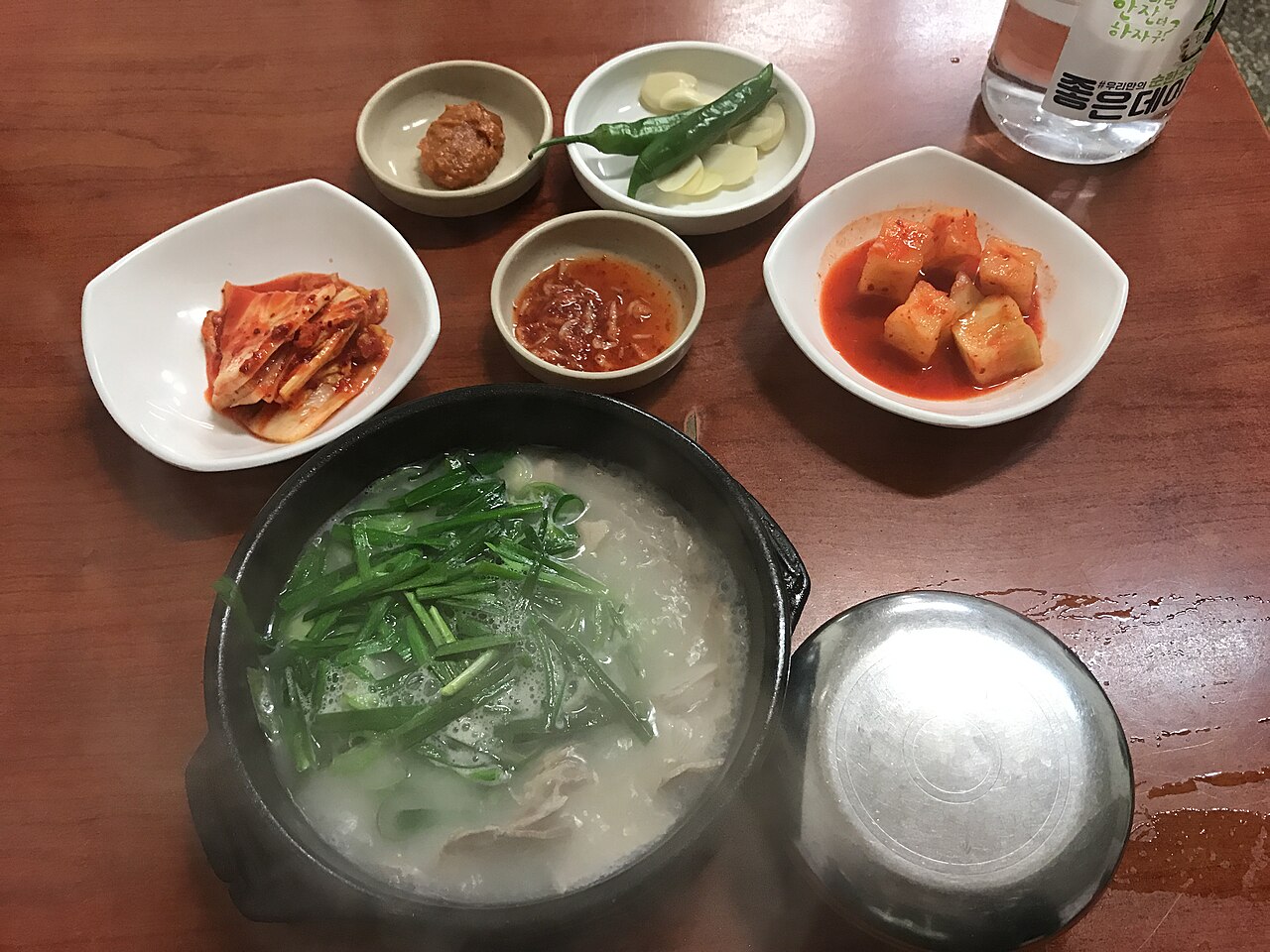
Gukbap (국밥) is a hot soup served with rice, a one-bowl meal that Koreans eat all year round. Guk (국) means soup and bap (밥) means cooked rice. The rice is either already in the soup or served beside it, and you add it yourself.
Most gukbap restaurants serve it in a heavy stone or metal bowl that keeps the soup boiling at the table. Side dishes such as kimchi (김치) and kkakdugi (깍두기), diced radish kimchi, come with it, and you season the soup yourself with salt, pepper and a few extras on the table.
"Korean soup" covers many quite different dishes. The meat, the broth and how spicy it is change a lot, so it helps to know the kinds before you order.
Kinds of gukbap and Korean soups
Sundae-guk 순대국
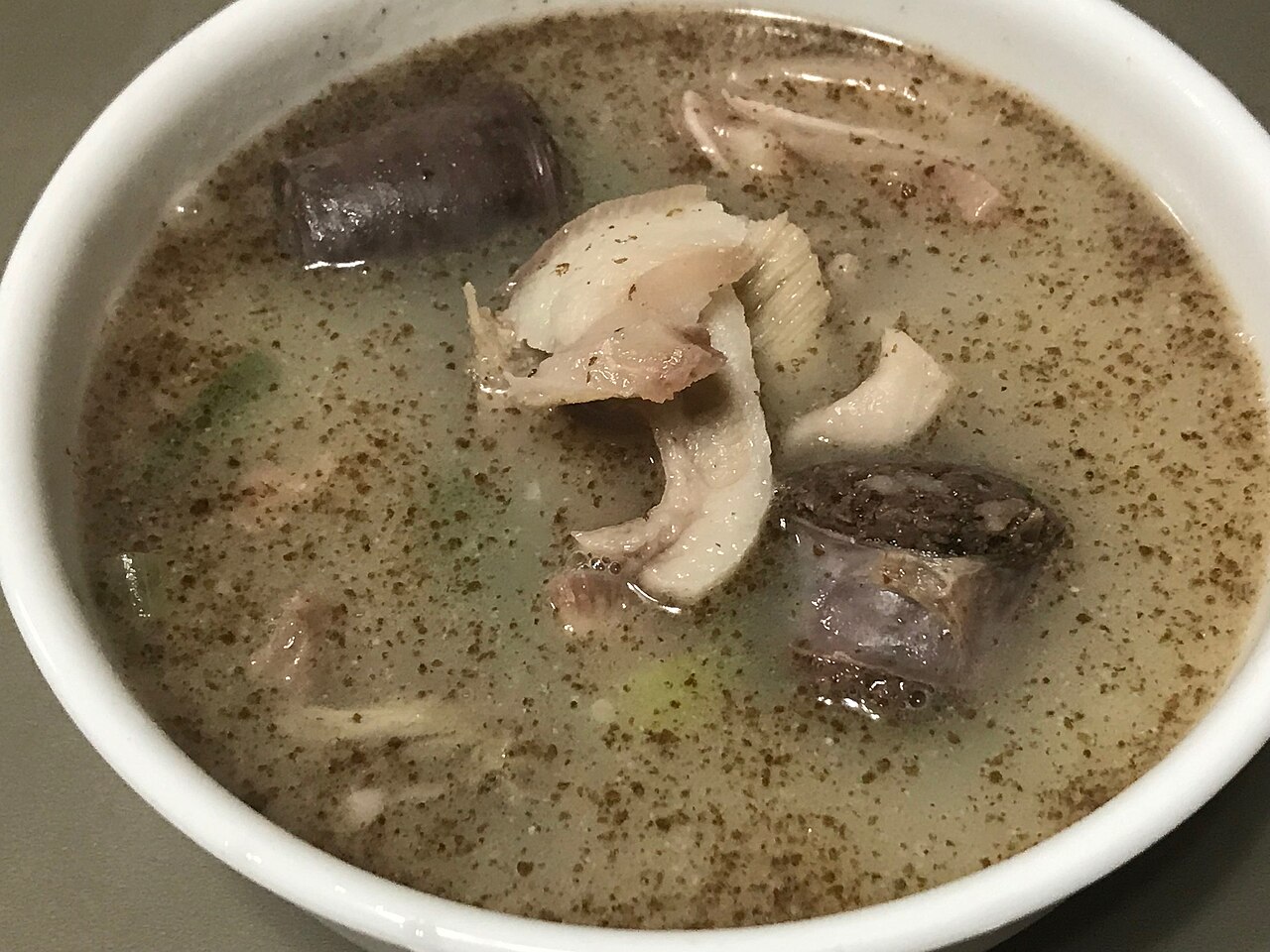
Sundae (순대) is Korean sausage, often blood sausage stuffed with noodles or rice. Sundae-guk is a pork-bone soup with slices of sundae and cuts of pork, sometimes offal as well. The broth is mild and cloudy, and it is usually seasoned at the table with salted shrimp (saeujeot, 새우젓), chopped chives or a spoonful of chili paste.
Pork gukbap 돼지국밥
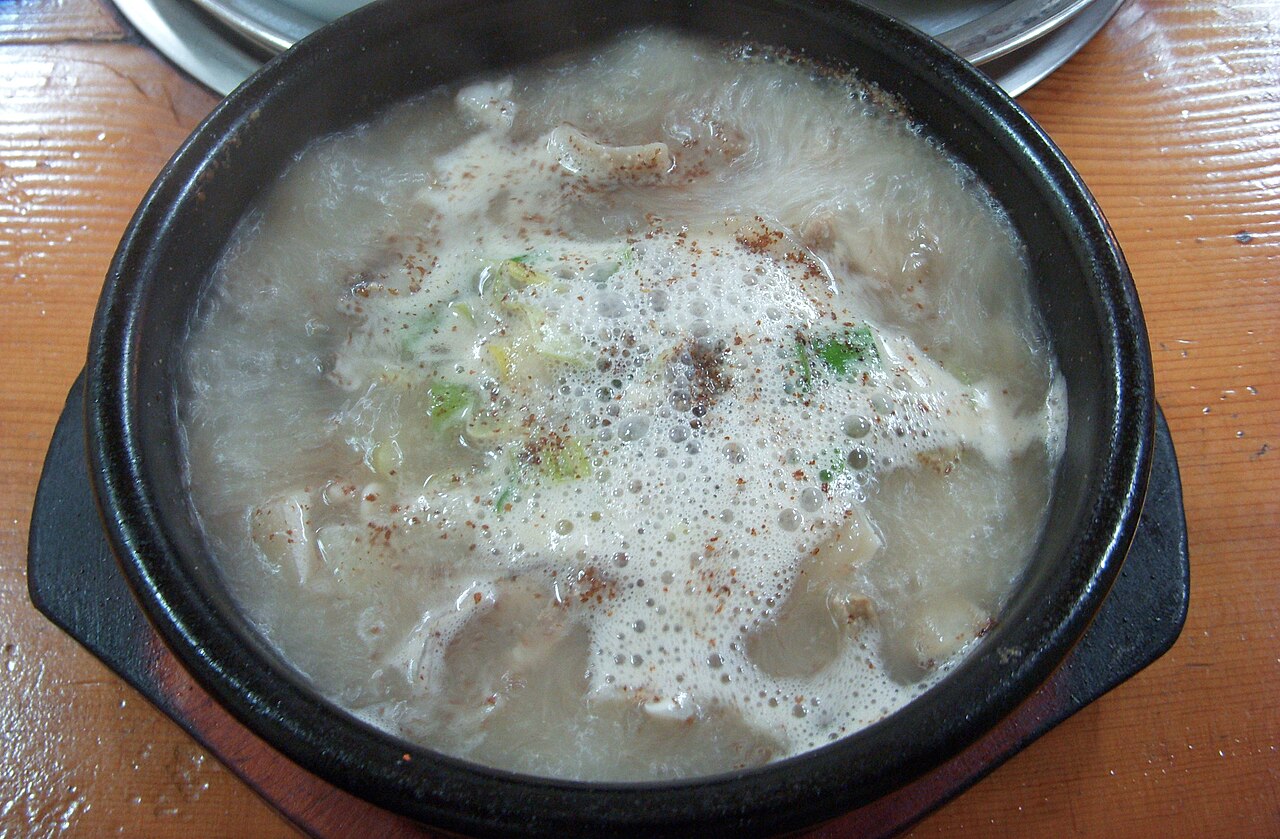
Dwaeji (돼지) means pig. Dwaeji-gukbap is sliced pork in a milky broth made by simmering pork bones for a long time, with rice served in or beside the bowl. It is strongly associated with Busan, but you can find it in Seoul. The broth is mild until you season it, and chives, salted shrimp and kimchi are the usual add-ins.
Seolleongtang and gomtang 설렁탕·곰탕
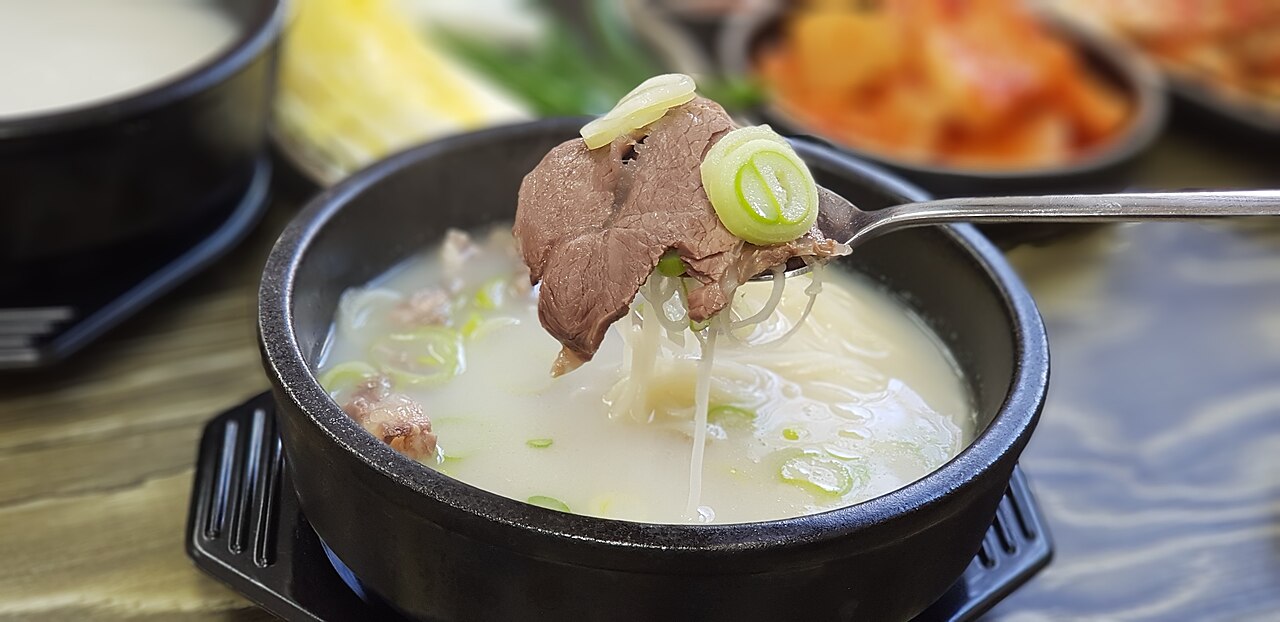
Seolleongtang (설렁탕) is a milky white soup made from long-simmered ox bones and beef cuts, served unseasoned. You add salt, pepper and chopped scallions (pa, 파) yourself. Gomtang (곰탕) is a similar beef soup with a clearer broth. Both come with rice and kkakdugi on the side, and are an easy, mild choice for a first Korean soup.
Haejang-guk 해장국
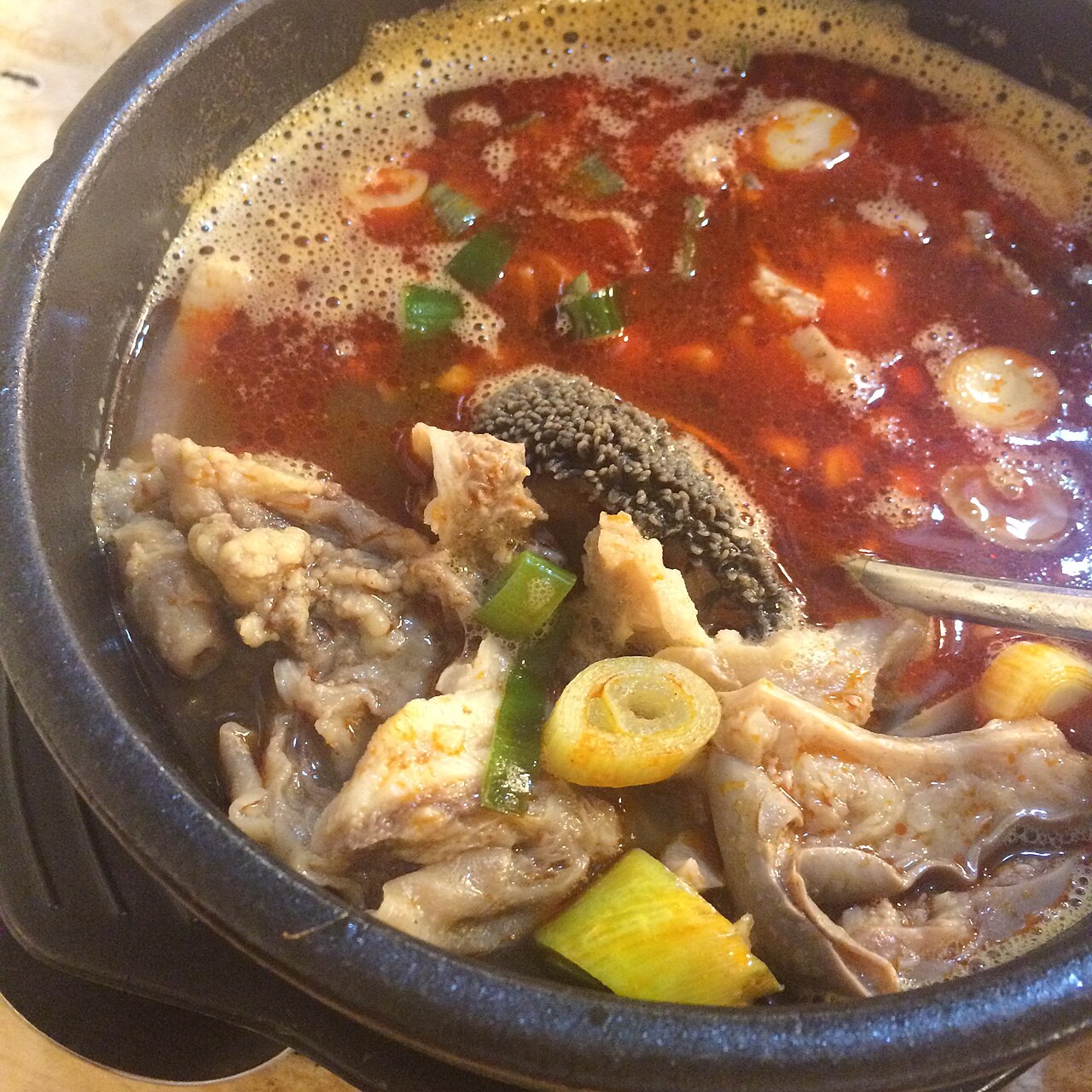
Haejang (해장) means curing a hangover, and haejang-guk is the soup people eat for it, usually the morning after drinking. It is not one recipe. The best-known kind is a spicy beef bone broth with ox blood curd (seonji, 선지), cabbage and radish, and there are also versions with soybean sprouts. It is served with rice and kimchi like other gukbap.
Gamjatang 감자탕
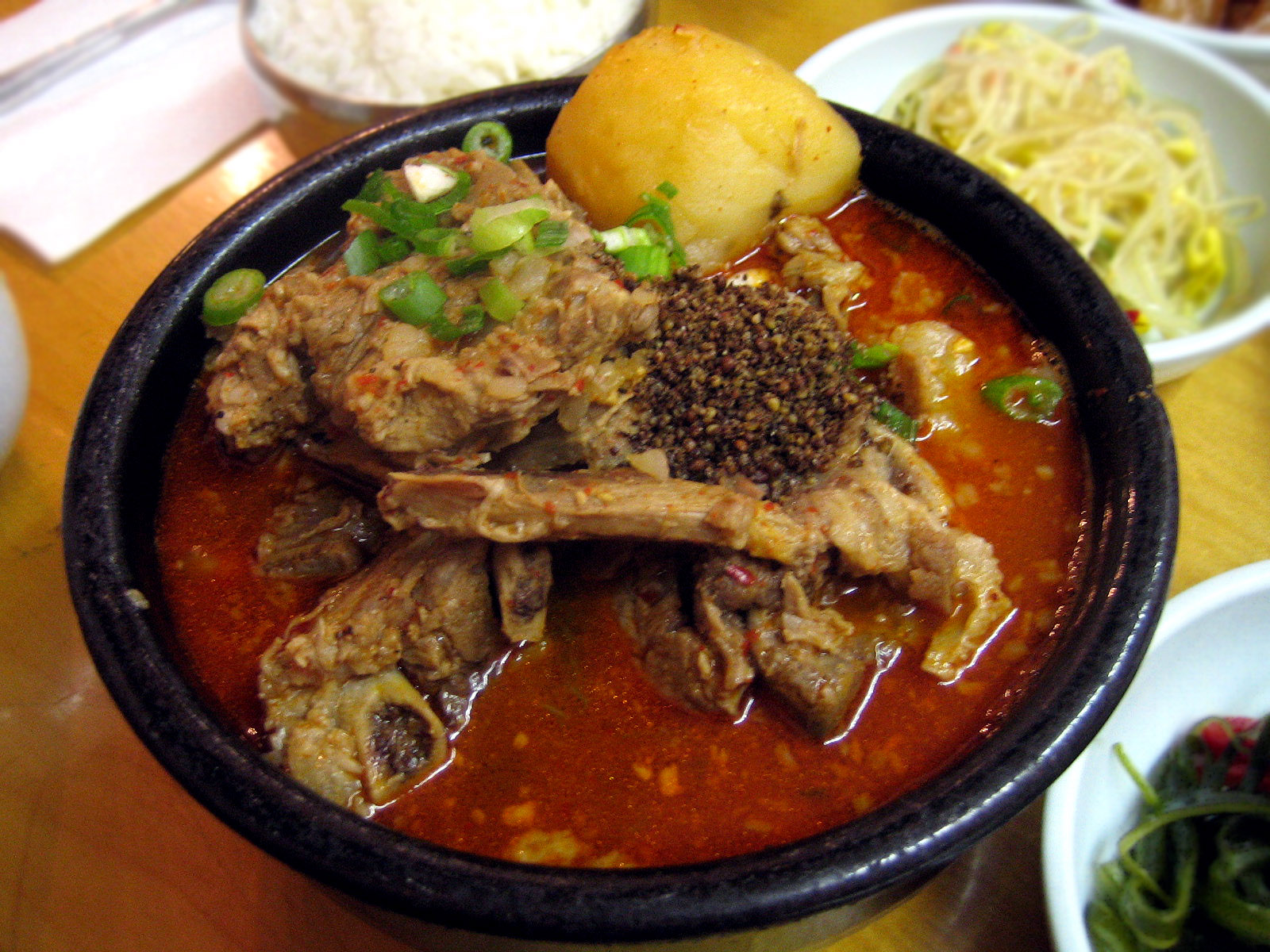
Gamjatang is a spicy stew of pork neck or spine bones, vegetables and potatoes, flavored with chili and perilla seed powder. It is eaten from a shared pot, and you pull the meat off the bones with chopsticks. It is a good dish to share with friends. Many places also stir-fry rice in the leftover broth at the end.
Samgyetang 삼계탕
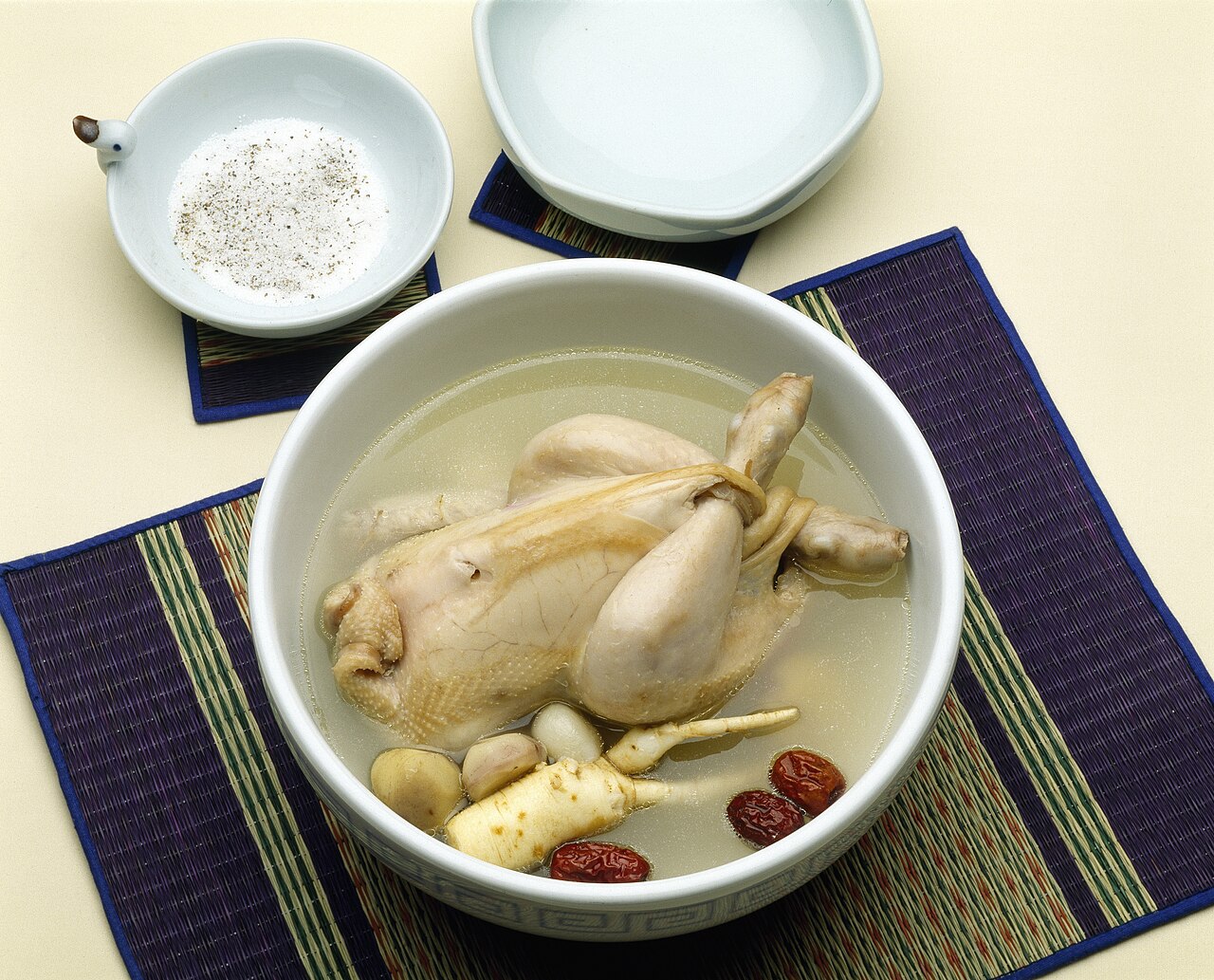
Samgyetang (삼계탕) is a whole young chicken stuffed with glutinous rice, ginseng (insam, 인삼), garlic and jujubes (Korean dates), and simmered in a clear broth. It is served in a hot stone pot, one chicken per person. Koreans traditionally eat it in the hottest days of summer, as a way to restore energy, but it is served all year. Salt and pepper are on the table to season the broth.
How to eat and order
Order by the name of the soup and pay at the counter or table. Most gukbap places serve one bowl per person, with side dishes included. Gamjatang is the exception: it comes in a pot meant for two or more people.
Taste the soup first, then season it. Add salt, chopped scallions, chives or salted shrimp a little at a time. Most places have a bowl of kimchi and radish you can refill.
Use the spoon for soup and rice, and chopsticks for the side dishes. If rice and soup come separately, many people put the rice into the soup. The bowl is very hot, so wait a moment before you eat.
Where to find it
- COEX & Starfield Library 코엑스 Seolleongtang
- Gyeongbokgung Palace 경복궁 Samgyetang
- Hongdae 홍대 Sundae-guk
- Namdaemun Market 남대문시장 Kkori gomtang
- Seochon 서촌 Samgyetang
- Seongsu-dong Cafe Street 성수 카페거리 Gamjatang
- Yeonnam-dong 연남동 Sundae-guk
Photo credits
- Main photo: chomjong, CC BY 2.0, Wikimedia Commons
- Sundae-guk: lazy fri13th, CC BY 2.0, Wikimedia Commons
- Pork gukbap: LWY, CC BY 2.0, Wikimedia Commons
- Seolleongtang and gomtang: 이동원, CC0, Wikimedia Commons
- Haejang-guk: chomjong, CC BY 2.0, Wikimedia Commons
- Gamjatang: comicpie, CC BY 2.0, Wikimedia Commons
- Samgyetang: wizdata, CC0, Wikimedia Commons